Richard Gilbride
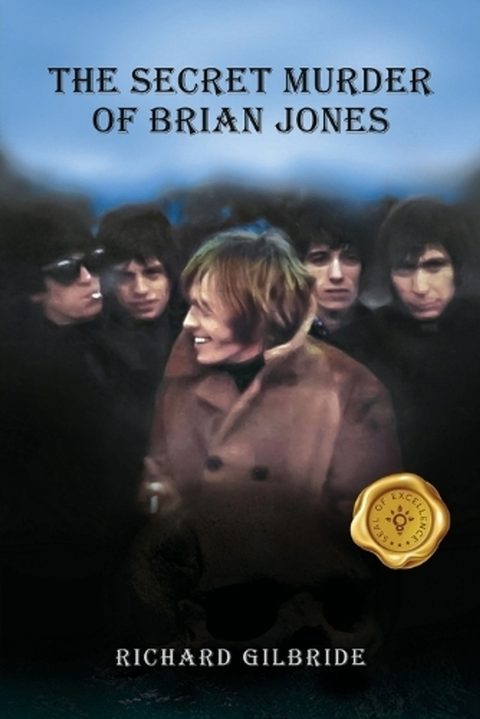
Cover of The Secret Murder of Brian Jones by Richard Gilbride: the early Rolling Stones in shadow, Brian Jones in front in a tan coat, under a pale blue sky.

Richard Gilbride The Secret Murder of Brian Jones 2025

Officially, around midnight.

On July 2, 1969, Brian Jones, founder of the Rolling Stones, was found at the bottom of the swimming pool at his Sussex farmhouse. The inquest called it misadventure. Richard Gilbride’s investigation argues otherwise, and begins where the records stop agreeing: on the clock.

Find the book Walk through the night

One night, several clocks

The hour Brian Jones died depends on whom you ask, and when they were asked. Each mark is a time given in the records and recollections the book examines.

  1. Last seen

    A carpet-fitter working in the house told police in 1994 that he last saw Jones at 9 PM, “sober and in good condition.”

    Remembered later · Chapter 4

  2. Gilbride’s reading

    Working from the witnesses’ times, sunset (about 9:20 PM) and the last of the twilight, Gilbride places the death closer to 10 PM, well before the time on the inquest record.

    The author’s reading · Chapter 14

  3. …or ten?

    Interviewed in 2000, the same man remembered Jones calling “See you in the morning” from a window at 10 PM. One witness, two times.

    Remembered later · Chapter 4

  4. Screaming, cars

    The housekeeper and her husband, in a cottage up the lane, told one biographer they heard screaming and cars leaving at about ten.

    Remembered later · Chapter 3

  5. Inquest record

    The coroner’s inquisition, completed at the inquest on July 7, 1969, gives the time as “approximately 11.30 p.m.” on July 2, and the verdict as misadventure.

    On the record · Chapter 7

  6. Midnight. The inquest record says July 2; the gravestone says July 3.

  7. Police called

    The book’s first sentence: the body was taken from the pool “officially around midnight.” The emergency call reached the local police at 12:10 AM; the first officer arrived at 12:15.

    On the record, as reported · Chapters 1 and 6

  8. …or silence?

    Recorded by a fan-club researcher, the same couple said they heard nothing at ten: their daughter woke them after midnight, when police lights showed in the sky. The book weighs both.

    Remembered later · Chapter 3

  9. The band hears

    At a London recording studio, the band’s pianist took the telephone call with the news.

    Remembered later · Chapter 6

  10. Still by the pool

    The first officer on the scene recalled, decades later, that he stayed with the body beside the pool all night and went with it to the hospital at dawn. His report of July 3 does not mention it.

    Remembered later · Chapter 1

  11. Mortuary

    The body reached the hospital mortuary at East Grinstead. The autopsy was carried out the same day.

    On the record · Chapter 7

Times as given in the records and recollections the book examines. Drawn for this page; marks sit at the stated time, or at the nearest hour where a source says “about.”

Said then, said later

Gilbride’s method is to lay what was put on record in 1969 beside what the same people, or later experts, said years afterward.

The nurse staying at the house

July 3, 1969 · police statement

One of the men came in asking for a towel; she went out and saw him at the bottom of the pool.

2008 · newspaper interview

She called the statement “a pack of lies” and said a detective had suggested most of it.

The carpet-fitter

1994 · to police

Last saw Jones at 9 PM, sober and well.

2000 · newspaper interview

Jones called goodnight to him from a window at 10 PM.

The cottage up the lane

To a biographer

Screaming at about ten, then cars reversing out of the drive at speed.

To a fan-club researcher

Nothing at ten; woken after midnight by police lights.

The verdict

July 7, 1969 · inquest

Drowning while under the influence of alcohol and drugs: misadventure.

1994 and 2009

A Home Office pathologist reviewing the papers is reported as unable to exclude that Jones was held under water. In 2009 Sussex Police reviewed the case and found no new evidence to reopen it.

A case study in fourteen chapters

Gilbride calls the book “a criminological investigation,” not a rock history. It opens with a dream he had in the spring of 2020, in which Brian Jones pulls up beside him on an empty western highway, and it ends with a second dream, at his grave in Cheltenham.

The official verdict has never been changed. This book is Gilbride’s argument against it, built from the inquest papers, police notes, memoirs, biographies and interviews published over five decades.

  1. Chapters 1–7The sceneFrom the bonfire two days after the death to the coroner’s verdict: the people at the house, the building crew, a disputed eyewitness, the autopsy and toxicology.
  2. Chapters 8–10The bandThe relationships and rivalries of 1965–69, and how the founder lost the band he had named.
  3. Chapters 11–12The businessManagement, contracts and the ownership of the music.
  4. Chapters 13–14The night againHis dismissal from the band on June 8, 1969, and a reconstruction of July 2, hour by hour.

July 4, 1969 · the side garden at Cotchford Farm

The musician on the burn pile

Two days after the death, a bonfire was lit beside the farmhouse. The housekeeper and the gardener remembered clothes, books and papers going into it; the book argues that tapes and diaries went too.

Brian Jones founded the band in 1962 and named it after a Muddy Waters song. Before that he played the Cheltenham clubs as Elmo Lewis. On the records, his instruments carried the songs:

“He never seemed to get the credit he deserved, or any credit at all.”

From Gilbride’s preface
Instruments Brian Jones played on Rolling Stones recordings
InstrumentSongYear
Slide guitarLittle Red Rooster1964
SitarPaint It, Black1966
DulcimerLady Jane1966
MarimbaUnder My Thumb1966
RecorderRuby Tuesday1967

Boston, summer 1969

Richard Gilbride

Richard Gilbride, grey-haired and in a blue shirt, playing an acoustic guitar outdoors.

He was fourteen, reading the Boston Globe at home, when he found a one-paragraph item at the back of the first section: the Rolling Stones’ guitarist had drowned. He could not see how the band could go on without its founder.

Gilbride grew up in Boston in the 1960s, studied philosophy and chemistry, worked in the building trades and has played guitar for decades. His earlier books went to Dallas, to the assassination of President Kennedy, and to the people who worked in the Texas School Book Depository.

  1. 1969Reads of the drowning, aged fourteen
  2. 2009Matrix for Assassination
  3. 2015Begins publishing his JFK research online
  4. 2021JFK Inside Job
  5. 2025The Secret Murder of Brian Jones

Dallas, 1963: the earlier investigations

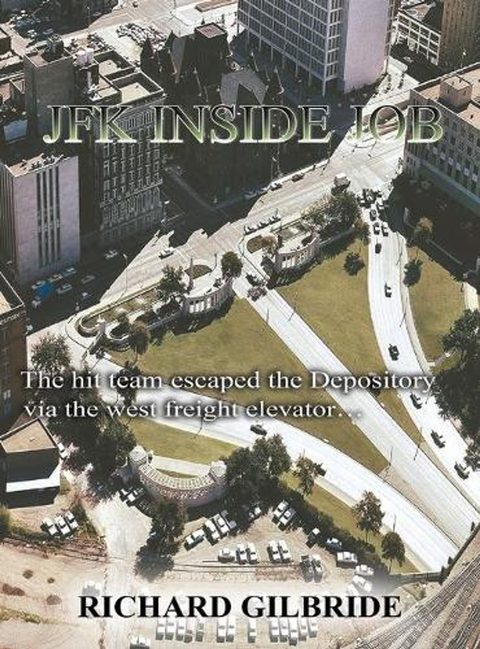
Cover of JFK Inside Job: an aerial photograph of Dealey Plaza, Dallas.

JFK Inside Job

GoldTouch Press · 2021 · 438 pages

Essays gathered from his research website. Since 2009 Gilbride has concentrated on the Texas School Book Depository and its employees; he argues that several of Lee Harvey Oswald’s co-workers took part in the plot and then framed him.

See JFK Inside Job at Barnes & Noble
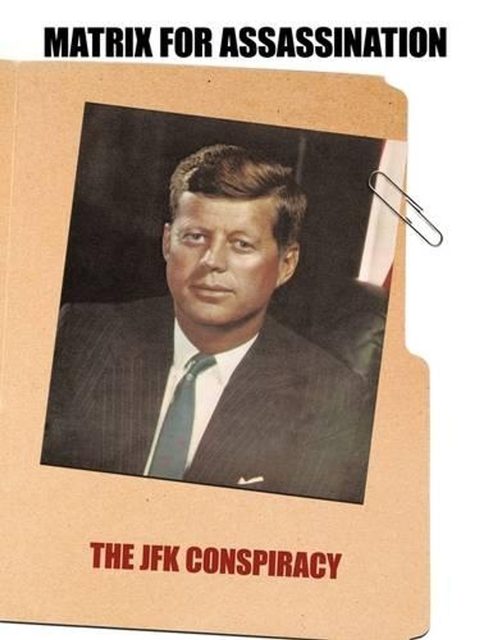
Cover of Matrix for Assassination: The JFK Conspiracy: a portrait of John F. Kennedy clipped to a manila case folder.

Matrix for Assassination: The JFK Conspiracy

Trafford Publishing · 2009 · 484 pages

His first book, drawing on assassination records released under the JFK Records Collection Act of 1992, with some 300 photographs: Gilbride’s case for a conspiracy at Dealey Plaza.

See Matrix for Assassination at Trafford
Cover of The Secret Murder of Brian Jones.

Dawn, July 3, 1969

The body lay beside the pool until morning. The book begins there.

The Secret Murder of Brian Jones, MainSpring Books, 2025.